Copper Plating Service in Chennai - Industrial Copper Plating & Metal Finishing
OVERVIEW
Copper Plating
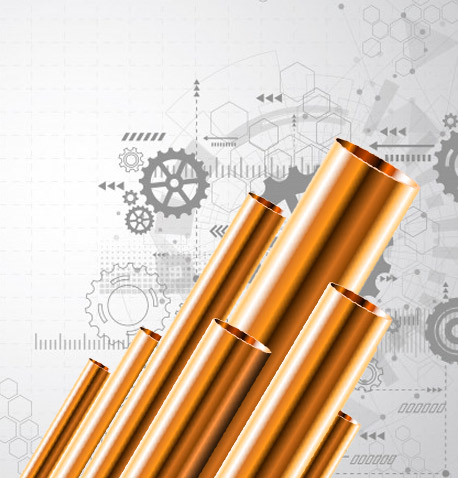
Baron’s Copper Plating is used in enhancing the conductivity of a substrate as copper is an effective metal at conducting electricity. It’s a general procedure endured in the form of electroplating after nickel plating. Copper Plating over a metal acts as a diffusion barrier. Using 99.99% pure electrolytic copper thickness of 250 microns over a low carbon high steel rod Baron Plating assures Corrosion-free property against all assets. Our Plating service are ideal in Industrial requisites & the Copper Metal Finished Products are assembled as per Mil-C-14550. Our ambition is to become the world's most efficient industrial solutions and services provider.
Benefits of Copper Plating
Excellent Thermal Conductivity
Corrosion Resistance
Malleability
COPPER PLATING SPECIFICATIONS
| Copper purity | 99.99% pure electrolytic copper |
|---|---|
| Coating thickness | 25 to 250+ microns, to specification |
| Process | Acid copper electroplating, preceded by nickel strike where required |
| Base metals accepted | Low-carbon and high-tensile steel, mild steel, cast iron, brass, aluminium (with appropriate pre-treatment) |
| Typical components | Earthing rods and electrodes, busbars, lugs, connectors, fasteners, terminals, strips and flats |
| Standard | Copper metal-finished products assembled as per MIL-C-14550 |
| Batch capacity | Job-work and bulk batches; rod lengths up to 3 metres |
| Plants | Gummidipoondi (Chennai, Tamil Nadu) and Kubadthal (Ahmedabad, Gujarat) |
OUR COPPER PLATING PROCESS, STEP BY STEP
Plating quality is decided before any copper is deposited — by how well the surface is prepared. Baron runs a full in-house line so every stage is controlled under one roof:
- Buffing — mechanical polishing to remove mill scale, weld spatter and surface irregularities, giving the copper a uniform surface to key into.
- Acid pickling — controlled acid immersion strips oxide and rust so the base metal is chemically clean. Skipping or rushing this stage is the most common cause of blistering and peeling later in service.
- Water rinse — multi-stage rinsing removes residual acid and prevents drag-over contaminating the plating bath.
- Dull nickel strike — where the base metal or the application requires it, a nickel layer is laid down first as a diffusion barrier between steel and copper, improving adhesion and long-term corrosion behaviour.
- Copper electroplating — deposition of 99.99% pure electrolytic copper to the specified micron thickness, with bath chemistry and current density monitored throughout the run.
- Oven cure and hot-air dry — controlled drying eliminates trapped moisture and water spotting, and stabilises the finish before dispatch.
WHY COPPER PLATING MATTERS IN AN EARTHING SYSTEM
In a buried earthing installation the copper layer is the entire corrosion allowance. Steel gives the component its mechanical strength — the ability to be driven into hard ground without bending — while the copper carries the fault current at the surface and stands between the steel and the soil. Once that layer is breached, corrosion attacks the core and earth resistance begins to climb, usually long before anyone digs the pit up to look. That is why coating thickness, not diameter, is the specification that decides service life. UL467 calls for a minimum of 250 microns; Baron plates to that standard for copper bonded earthing rods and to customer specification for job-work components.
APPLICATIONS
- ✓ Copper bonded earthing rods and earth electrodes
- ✓ Busbars, earthing strips and flats
- ✓ Lugs, clamps, couplers and earthing accessories
- ✓ Fasteners and terminals requiring high surface conductivity
- ✓ Electrical and electronic components needing a diffusion barrier before further plating
- ✓ General industrial job-work requiring corrosion protection with electrical performance
FREQUENTLY ASKED QUESTIONS
What copper thickness should I specify?
For decorative or light-duty electrical work, 25–50 microns is usually sufficient. For buried earthing components, specify 250+ microns — the UL467 minimum for copper bonded rods. Aggressive, chloride-rich or coastal soils justify the upper end of the range.
Do you accept job-work / customer material?
Yes. Baron plates customer-supplied components as job-work as well as plating its own earthing product lines. Send the drawing, base metal, quantity and required micron thickness and we will quote.
Why is nickel plated before copper?
A dull nickel strike acts as a diffusion barrier between the steel substrate and the copper layer. It improves adhesion and prevents inter-metallic migration over time, which matters most where the component will sit in the ground for decades.
Is copper plating the same as copper bonding?
Not quite. "Copper bonding" describes an electrolytic deposit thick enough and adherent enough to be treated as a metallurgical bond — which is what an earthing rod needs. Thin decorative copper plating will not survive being driven into soil. Baron's earthing rods are copper bonded, not merely copper flashed.
What is the HSN code for copper plated steel components?
Copper-plated steel bars and sections are commonly classified under HSN Code 72169920 at 18% GST. See the full earthing HSN code table.
Where is the plating done?
In-house at Baron's Gummidipoondi plant near Chennai, with a second facility at Kubadthal, Ahmedabad. Nothing is subcontracted, so process control and turnaround stay with us.
See copper bonded rods · Maintenance-free earthing electrodes · Request a plating quote — call +91 94440 87244.
Baron Copper Plating
What we do
Buffing
Adding detail to the Copper rods, given a lustrous and smooth polished finish. Polished Plating Finish, Standard Copper has a vibrant color that can be used for decorative finishes.
Acid Pickling
Coating the material (metal) with copper sulfate and sulphuric acid; Immersing in the electrolyte solution the material acts a cathode.
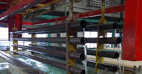
Water Rinse
The automotive industry is now undergoing the greatest upheaval in its history due to the advancement...
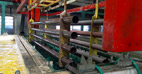
Dull Nickling
Diam vehicula platea blandit malesua quam hac vehicula id non leo dui et dapibu turpis quis, tempor augue duis ut justo...
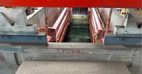
Oven
With IoT business solutions, manufacturers have the power not only to improve and automate production, but expand their value chain...
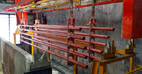
Hot Air Dry
The process of removing the surface moisture/water from the non-hygroscopic resins using heater/dryer. The excess water left behind from spare rinse is evaporated using this method refraining the metal from corrosion.